
Storm Damage · 4 min read ·
Hail Damage Roof Inspection: What a Roofer Checks After a Storm
After a storm, Chris starts in the gutters, then checks the shingles for hail hits and wind creases, the metal, and the fascia and soffit. Here is his walkthrough, from his own roof inspection.
01
The short answer
A hail damage roof inspection starts in the gutters. Then I check the shingles for hail hits and for wind creases, and I check the metal on the roof. Here is how I walk a roof, so you know what a storm damage inspection looks like.
I also check the fascia and soffit, and if you have stains on a ceiling, that is a reason to get the roof checked. Some of what I look for, like rot behind a gutter, you can't see from the ground. So when someone asks me about storm damage, I say: let me get on that roof and look.
02
Granules in the gutters
The first thing I do when I get on the roof is look in the gutters, or on the gutter guards. Shingles are covered in granules, and over time those granules come off and start filling up your gutters. That is one of the most telling signs that a roof is aging.
If I see a bunch of granules inside the gutter, that tells me the roof is old and really susceptible to storm damage. So if I find granules in the gutters, I know to check the rest of the roof closely for storm damage.
Want a pro to look at your roof?
Free. No obligation. Bailey calls or texts you back.

03
Hail hits on the shingles
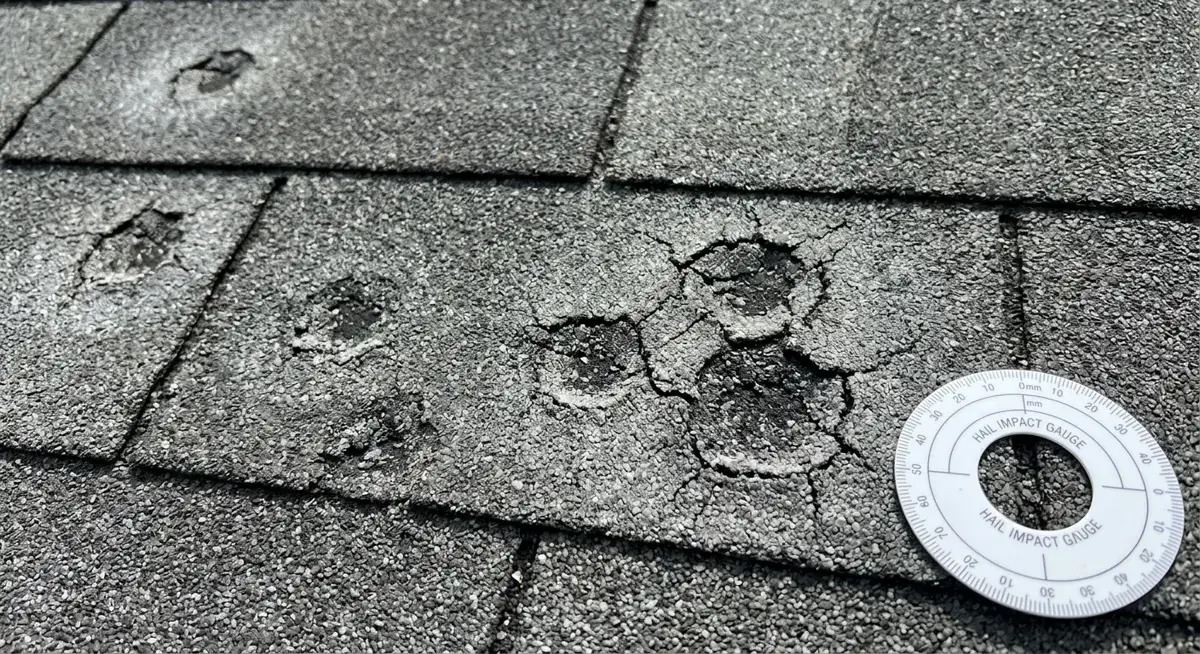
Storm damage comes in two forms: hail and wind. For hail, I look for anything on the shingles that looks like a hit. Sometimes it is just a tiny little hail hit.
Many adjusters mark out a test square on a slope, often 10 by 10 feet, and count the hail hits inside it. How many hits matter, and what that means for your roof, is up to your insurer and your policy. My job is to document what is actually there.
For what hail damage looks like up close, see our guide on how to spot hail damage on your roof.
04
Wind creases
Then I check for wind. When wind gets under a shingle, the shingle comes loose and is no longer stuck down. If the wind has been kicking shingles up, you start to see creases forming across them.
Shingles that are still stuck down usually do not crease.
05
Chalk on the metal
Another thing I do for hail is look at the metals. I put chalk on the metal, and that helps me find the spots where something hit it. When I document hail damage, I look for hits on the metals, granules in the gutters and hits on the shingles.
Then I check the information from the storm: the date, the wind speed and how big the hail was. All of those things need to be in line.
06
Fascia and soffit
One of the most common things I come across that homeowners don't know about is rotten fascia. You can't see it, because you usually have gutters up there. A lot of times the wood behind the gutter is starting to rot, or up under the edge in the soffit.
So when I am inspecting a roof, I check the fascia and the soffit. If that wood gets rotten, the gutter will fall off. If I see rot up there, I let the homeowner know, because the fascia will need to be replaced and the gutters with it.
07
Signs inside the house
If you see water stains on your ceiling or your walls, that is a good indication to get your roof checked. You can't always see the damage. You might see a couple of spots of water on the ceiling, but between there and your roof line is a whole bunch of space, so we don't know where the water is coming from.
When we take the roof off and see rotting wood, that is when the wood has to be replaced.
08
What to do next
If a storm came through, write down the date. Look at your ceilings and walls for water stains. Read your policy, because it sets the deadline for reporting damage, and most ask for prompt notice.
Then get the roof documented. We document the damage with photos and a written report you keep. Your insurer decides coverage under your policy.
If you file, we can be on site when the adjuster inspects, to point out what we documented. To get started, request a free inspection or call (984) 217-6631.
Check us yourself, on Google and the BBB
Want a pro to look at your roof?
A free inspection comes with a photo report you can keep.
Free. No obligation. Bailey calls or texts you back.