
Roof Repair · 4 min read ·
How to Find a Roof Leak (Start From the Attic, Not the Roof)
The safest way to find a roof leak is from the inside. Here is the attic method, the usual entry points, and why the stain is often far from the source.
01
The short answer
Start inside, in the attic, with a flashlight. Look at the underside of the roof deck and the insulation for dark wood, wet spots or water trails. Then trace them uphill toward a likely entry point such as flashing, a pipe boot or a valley. Do not go on the roof. Our roof repair page covers what a roofer does from there.
02
Why is the leak not above the stain?
Water travels. There is a whole bunch of space between your ceiling and the roof line, so the stain location does not tell you where the water enters. Water can run along a rafter or the underside of the deck before it finds a gap and drips. So the stain is where it shows, not where it starts. If you have one, read water stain on ceiling for the steps to take today.
Want a pro to look at your roof?
Free. No obligation. Bailey calls or texts you back.

03
How do I check the attic safely?
Only if the attic is easy to reach and has a floor or clear walkway.
- Wait for daylight and a dry day. Use a bright flashlight.
- Step only on joists or a floored path. Never step between joists, because the ceiling will not hold you.
- Look above the stain first, then uphill from it. Water runs down.
- Check for dark or damp wood, wet or compressed insulation, rust on nails, and water trails on the underside of the deck.
- Look around anything that passes through the roof: plumbing vent pipes, chimneys, skylights, exhaust fans.
- Take photos. Note the date and when the leak showed up in relation to rain.
If you see active dripping, a sagging ceiling or crowded wiring, stop and call someone. Do not go up a ladder to the roof to look. Falls from roofs are a real risk, and a roofer has the gear for it.
04
What are the common entry points?
Most leaks start where the roof is interrupted, not in the open field of shingles.
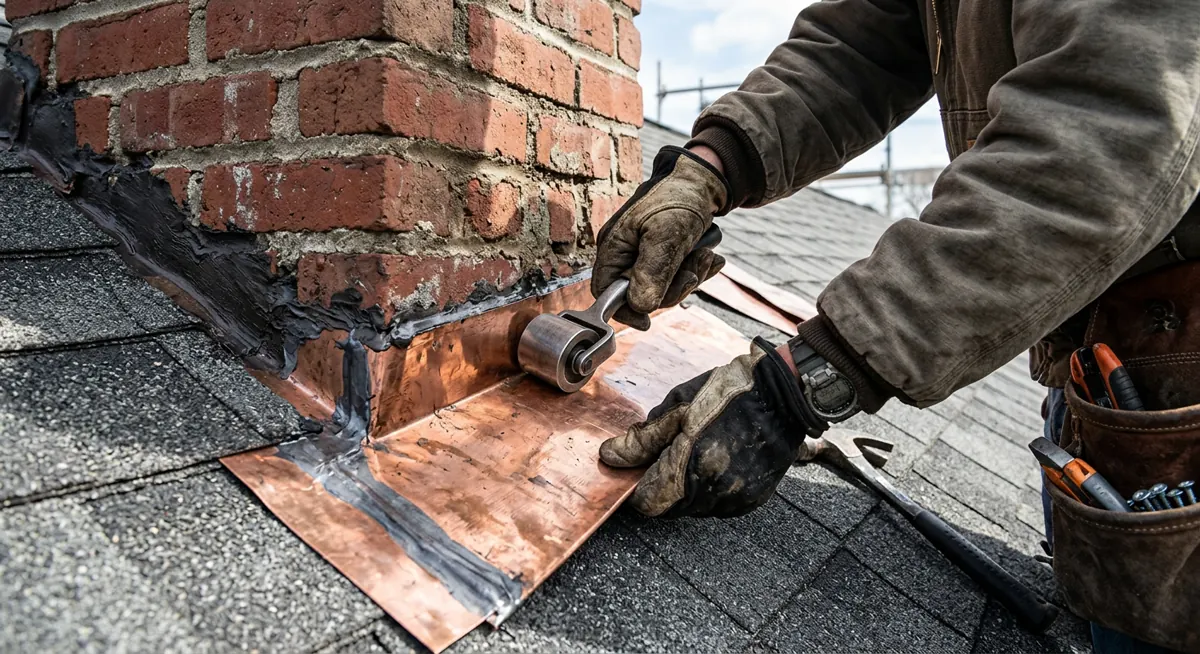
- Flashing. Metal flashing seals joints at chimneys, walls and skylights. The Building America Solution Center says any penetration through the roof (vents, flue stacks, chimneys, skylights) is a weak spot where water could leak in, and that missing, damaged or poorly installed flashing at penetrations, roof-wall joints and valleys should be repaired (PNNL Building America Solution Center).
- Pipe boots and vents. Plumbing vent pipes are penetrations through the roof, and the Building America Solution Center lists vents among the weak spots. Check around the vent pipe for water trails.
- Valleys. Where two roof planes meet, a lot of water runs through one line, so the seam matters.
- Shingles. Wind can lift shingles so they are loose and no longer stuck. I look for creases where wind has kicked them up.
05
What does a roofer do that I cannot?
On the roof, a roofer checks flashing, pipe boots, valleys and shingles. The part you cannot see is the wood. You only know the real damage when the roof is off, so an attic check can point at a spot but not confirm what is behind it. If a repair means finding wet or rotted wood, that shows up as the work opens the area.
06
When should I call?
Call when the stain is new, when it grows after rain, when you see wet insulation or dark wood in the attic, or when you simply cannot find the source. Request a free inspection or call (984) 217-6631. If you want to know whether a repair will hold, see roof repair or replace.
07
What to do next
Keep your dated photos and rain notes. Share them at the inspection.
Related services
Check us yourself, on Google and the BBB
Want a pro to look at your roof?
A free inspection comes with a photo report you can keep.
Free. No obligation. Bailey calls or texts you back.